Psicoanálisis en extensión · Duelo · Cultura
Psychoanalysis in extension · Mourning · Culture
Muerte del Indio: duelo parasocial y pérdida simbólica en el consultorio
The death of the Indio: parasocial grief and symbolic loss in the consulting room
Por qué la muerte de una figura admirada puede doler como la de alguien cercano, y qué tiene para decir el psicoanálisis sobre el duelo que llega al consultorio sin un vínculo "real" de por medio.
Why the death of an admired figure can hurt like the death of someone close, and what psychoanalysis has to say about grief that arrives in the consulting room without a "real" bond behind it.
Los últimos días vi en el consultorio y en la clínica algo que me llamó la atención: varios pacientes, sobre todo aquellos entre 30 y 55 años, haciendo referencia a la muerte del Indio Solari y a cómo esta les afectó muchísimo. Frases como “Me destruyó”, “No podía parar de llorar” “No pude hacer nada en toda la semana”, nos recuerdan a lo que sucede cuando se pierde a un ser querido y cercano.
Una pérdida real
El psicoanálisis enseña que el duelo no es un proceso homogéneo: no se mide por la cercanía física con el muerto ni por el vínculo civil que los unía. Lo que determina la intensidad de una pérdida es el lugar que esa persona (o esa figura), ocupaba en la economía subjetiva de quien la pierde.
El psicoanalista Jorge Bafico, de la Facultad de Psicología de la Universidad de la República, plantea que el sufrimiento nunca depende de quién murió, sino de qué se perdió para uno con esa muerte. Y agrega que la muerte de una figura admirada suele funcionar como un espejo: Creemos llorar solamente al artista, pero también lloramos algo de nuestra propia historia.
Esto tiene consecuencias clínicas directas. Cuando un paciente llora al Indio Solari, no está necesariamente llorando al hombre (ese Roberto Patricio Fontán que él mismo ocultó detrás de un apodo que se volvió mito). Está llorando una voz que lo acompañó en la adolescencia, un recital compartido con alguien que ya no está, una época que se fue y que ahora, con esta muerte, se cierra de manera definitiva. Perdemos una época, dice Bafico.
Es sin lugar a dudas una pérdida real.
El duelo parasocial como categoría clínica
La investigación en psicología ha comenzado a nombrar este fenómeno con el término duelo parasocial. Bernal Navas y Guzmán Moreno, en su revisión sobre las formas del duelo más allá del fallecimiento de un ser querido, lo definen como el dolor y el luto emergente de la ruptura de una relación parasocial: ese vínculo a largo plazo que una persona establece con alguien que no conoce en su vida real (un artista, un político, un personaje público) y en el que, sin embargo, ha invertido afecto, identificación, tiempo e historia personal.
Lo que el concepto de duelo parasocial define es algo que la clínica solía pasar por alto: que el vínculo afectivo con una figura pública puede tener la misma densidad subjetiva que cualquier relación significativa. La reciprocidad del vínculo no determina su peso, más bien, lo que importa es la función que esa figura cumplía para ese sujeto en particular.
Estudios sobre respuestas de duelo parasocial (como el análisis de la muerte de Kobe Bryant en plataformas digitales, realizado por Bingaman en 2020) muestran que las reacciones a corto plazo son tristeza intensa y shock, comparables en su fenomenología a las que produce cualquier pérdida significativa. El dolor es proporcional a la intensidad de la relación parasocial construida, no a si esa relación era bilateral o unilateral.
Esto obliga a revisar ciertos supuestos clínicos. No alcanza con constatar que el paciente "no lo conocía en persona" para desestimar la intensidad de lo que atraviesa. La pregunta pertinente no es si la relación era real o imaginaria, sino qué función cumplía para ese sujeto en particular.
Lo que el Indio organizaba
Para entender el peso clínico de esta muerte en particular hay que considerar qué representaba la figura del Indio Solari para la generación que hoy consulta.
Patricio Rey y los Redonditos de Ricota fue una banda que durante los años ochenta y noventa en Argentina construyó algo que excedía la música. Sus letras, deliberadamente herméticas, funcionaban como un código que los ricoteros portaban como una marca de identidad. Los recitales (las llamadas "misas ricoteras") tenían una dimensión ritual que exedía en mucho lo que entendemos por concierto: multitudes de decenas de miles de personas que cantaban de memoria canciones cuya letra rozaba el delirio surrealista, como si esa opacidad compartida creara una comunidad más sólida que cualquier programa político.
En términos lacanianos, una figura como la del Indio puede operar como lo que Alemán (siguiendo a Lacan) denomina un significante Amo: un significante que organiza el mundo del sujeto, que le da consistencia, que articula identificaciones. Como una voz que inaugura un modo de estar en el mundo, de resistir, de nombrarse.
Cuando algo articulado a ese significante desaparece, (en este caso la desaparición real de la persona que lo portaba, el Indio) no se produce solo una tristeza, sino una dislocación en la trama simbólica. Alguien que no puede hacer nada no está exagerando ni siendo dramático; algo que organizaba dejó de funcionar como anclaje.
La soledad que busca lo común
Jorge Alemán, en Soledad: Común. Políticas en Lacan, propone que el sujeto lacaniano surge como un vacío sin sustancia. Él habla de una soledad que es radical, en el sentido de que ninguna relación puede cancelar definitivamente ese lugar vacío y excepcional. Esa soledad no es lo mismo que aislamiento, tiene un borde, encuentra su contorno, en lo que Alemán llama lo Común.
Lo Común, en esta perspectiva, tiene que ver con la contingencia, o sea eso que aparece en un momento determinado, como un encuentro; que puede surgir en el arte, en el amor, en la amistad, en la política: aquello que emerge del encuentro solitario de cada uno con Lalengua, neologismo de Jacques Lacan que refiere a algo anterior al lenguaje como estructura de comunicación: una mezcla paradójica de significantes y pulsiones, un “aparato de sonidos” que nos impacta desde antes de nacer y deja marcas que no tienen un anclaje fijo, sino que se sienten directamente en la carne. Alemán destaca que se trata de un encuentro traumático entre los signos y la masa corporal del ser vivo. En su análisis político-psicoanalítico, Lalengua es la base de la “soledad común”: aquello que todos los seres hablantes compartimos en un nivel más profundo que la cultura o el mercado, y que la lógica del rendimiento neoliberal no logra homogeneizar ni domesticar por completo.
La cultura ricotera funcionó durante décadas como una de esas formas del Común. Su voz (esa voz particular, inconfundible, que mezclaba provocación y lirismo y cierta rareza sistemática) tocaba algo en cada oyente que luego ese oyente reconocía en el otro. Un encuentro de soledades en torno a algo que nadie terminaba de explicar, pero que todos sentían propio.
La muerte del Indio fractura ese espacio. No lo aniquila (las canciones siguen existiendo, los discos permanecen), pero altera su condición: lo vivo se vuelve archivo, la presencia se clausura como pasado. Y eso tiene un peso subjetivo que el consultorio debe poder recibir sin apresurarse ni pasar por alto.
La época como telón de fondo
Hay otra dimensión que aparece en el material clínico y que merece ser pensada. La generación que hoy llora al Indio es también la generación que vivió la imposición del modelo neoliberal en sus años formativos. Argentina de los noventa, ajustes estructurales, crisis del 2001, precarización del trabajo. Décadas de un proyecto que, como describe Alemán en "Neoliberalismo y subjetividad", tiene como propósito producir un tipo de sujeto: el empresario de sí mismo, entregado al máximo rendimiento y la competencia, homogeneizado en una lógica de mercado que coloniza todas las esferas de la existencia.
La cultura ricotera fue, entre otras cosas, una forma de resistencia a esa homogeneización. El Indio no hablaba el lenguaje del éxito ni de la autosuperación. Sus letras evocaban marginalidad, rareza, una relación con el goce y con el fracaso que escapaba a la racionalidad del rendimiento. Ser ricotero era, en algún sentido, plantarse de una manera particular frente al mundo. Una postura subjetiva que decía: hay algo que no se vende, hay un goce que no se cotiza.
Con su muerte, algunos pacientes sienten (sin siempre poder articularlo) que se va uno de los últimos grandes referentes que sostenía esa postura, que queda más expuesta la intemperie neoliberal, que ya no hay voz que ponga en palabras esa forma de estar que ellos sentían nombrada.
Podemos leer esto como el registro de una pérdida simbólica que tiene efectos reales.
Lo que el clínico puede ofrecer
En primer lugar, no patologizar. El duelo parasocial, cuando sigue su curso, no es una enfermedad, sino un proceso de elaboración que merece el mismo respeto que cualquier duelo. Lo que orienta la escucha es si hay elaboración o congelamiento, no la duración del proceso.
Lo que sí puede orientar la escucha clínica es la pregunta por lo singular: ¿qué fue, para este paciente en particular, lo que el Indio representó? ¿A qué época de su historia remite esa figura? ¿Qué perdió con ella que creía tener todavía?
Porque lo que suele encontrarse, cuando se sigue ese hilo, va más allá de la pérdida del artista: aparece la pérdida de una versión de sí mismo, de un momento de la vida en que algo era posible, en que la identidad estaba en formación y encontró en esa voz un espejo que le devolvía algo valioso. La muerte del ídolo clausura retroactivamente ese momento y le pone una lápida que vuelve definitivo lo que todavía parecía abierto.
Eso se llama duelo. Y el duelo, cuando no se congela, es un proceso que permite (con el tiempo) encontrar una nueva relación con la ausencia. No reemplazarla, no superarla en el sentido de olvidarla, sino incorporarla: que lo que se perdió pase a formar parte de lo que uno es, sin que eso detenga la vida.
"Lo que suele preocupar no es la intensidad del dolor, sino su congelamiento. Cuando la vida queda detenida. Cuando nada nuevo puede ocurrir."
— Bafico, J., 2026
La distinción es clínica y es fina, pero es decisiva.
Coda
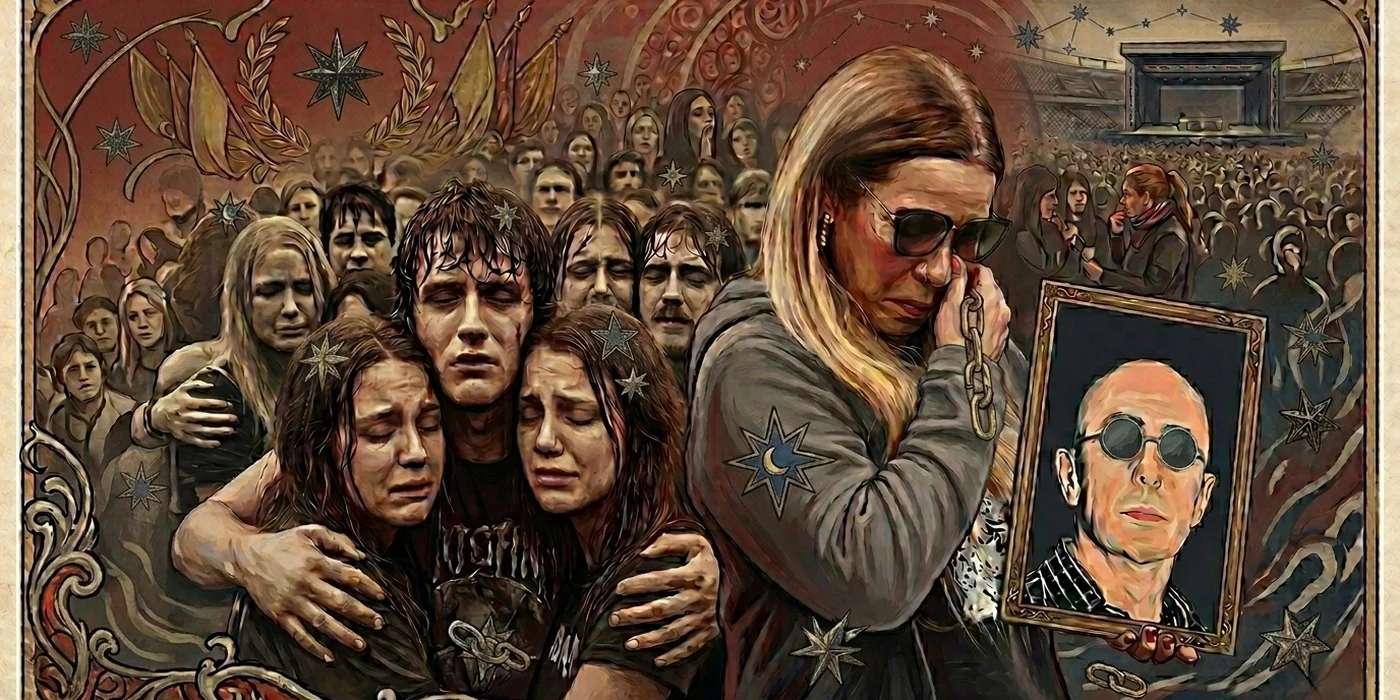
El Indio Solari murió a los 77 años, el 5 de junio de 2026. La plaza del Congreso en Buenos Aires concentró ese día algo que los medios estimaron en un millón de personas. Banderazos, pogos espontáneos, velas, flores, letras escritas en cartón. El dolor, materializado colectivamente, buscaba testigos.
En el consultorio, el fenómeno llega en otro registro: más íntimo. Pero no por eso menos verdadero.
La clínica tiene la posibilidad (y la responsabilidad) de recibirlo sin reducirlo, sin apresurarse a explicarlo, sin decidir de antemano cuánto debe durar, y de dejar que la pregunta se abra: ¿qué perdiste realmente? ¿De qué te habla este dolor?
No Importan tanto las respuestas a estas preguntas, pero poder hacerlas ya es, en sí mismo, parte del proceso del duelo.
*Las citas son parafraseadas
Referencias
- Alemán, J. (2012). Soledad: Común. Políticas en Lacan. Capital Intelectual, Buenos Aires.
- Alemán, J. Neoliberalismo y subjetividad. Campus Educativo Santa Fe. Recuperado de campuseducativo.santafe.edu.ar
- Bafico, J. (2026, junio). Entrevista en Montevideo Portal, reproducida por la Facultad de Psicología de la Universidad de la República. Recuperado de psico.edu.uy
- Bernal Navas, A. y Guzmán Moreno, S. T. (2022). El duelo: más allá de la muerte, más allá de la pérdida de un ser querido. Meridiano. Revista Colombiana de Salud Mental, 1(2), 32–42. https://doi.org/10.26852/28059107.627
- Bingaman, J. (2020). Parasocial grieving and the collective mourning of Kobe Bryant on Reddit. OMEGA - Journal of Death and Dying. https://doi.org/10.1177/0030222820971531
- Freud, S. (1917). Duelo y melancolía. En Obras completas, Tomo XIV. Amorrortu.
Material de divulgación · No reemplaza la consulta profesional · © Lic. Javier Azarola · psicoazarola.com.ar
¿Cómo viviste la muerte del Indio, o de algún otro referente de la cultura importante para vos?
Psicoterapia online para adultos y adolescentes · Sin lista de espera
Hacer una consulta
Over the past few days I noticed something in the consulting room and in the clinic that caught my attention: several patients, especially those between 30 and 55 years old, referring to the death of Indio Solari and how deeply it affected them. Phrases like "It destroyed me," "I couldn't stop crying," "I couldn't do anything all week," resemble what happens when someone loses a close, beloved person.
A real loss
Psychoanalysis teaches that mourning is not a homogeneous process: it is not measured by physical closeness to the deceased, nor by the civil bond that united them. What determines the intensity of a loss is the place that person (or that figure) occupied in the subjective economy of the one who loses them.
The psychoanalyst Jorge Bafico, from the Faculty of Psychology at the Universidad de la República, argues that suffering never depends on who died, but on what was lost for that person with that death. He adds that the death of an admired figure often works like a mirror: We believe we are mourning only the artist, but we are also mourning something of our own history.
This has direct clinical consequences. When a patient cries for Indio Solari, they are not necessarily crying for the man (that Roberto Patricio Fontán whom he himself hid behind a nickname that became a myth). They are crying for a voice that accompanied them through adolescence, a concert shared with someone who is no longer here, an era that has ended and that, with this death, now closes definitively. We lose an era, Bafico says.
It is, without a doubt, a real loss.
Parasocial grief as a clinical category
Research in psychology has begun to name this phenomenon with the term parasocial grief. Bernal Navas and Guzmán Moreno, in their review of forms of grief beyond the death of a loved one, define it as the pain and mourning that emerges from the rupture of a parasocial relationship: that long-term bond a person establishes with someone they do not know in real life (an artist, a politician, a public figure) and in which, nonetheless, they have invested affection, identification, time, and personal history.
What the concept of parasocial grief defines is something the clinic used to overlook: that the affective bond with a public figure can carry the same subjective density as any significant relationship. The reciprocity of the bond does not determine its weight; rather, what matters is the function that figure fulfilled for that particular subject.
Studies on parasocial grief responses (such as Bingaman's 2020 analysis of the death of Kobe Bryant on digital platforms) show that short-term reactions are intense sadness and shock, phenomenologically comparable to those produced by any significant loss. The pain is proportional to the intensity of the parasocial relationship built, not to whether that relationship was bilateral or unilateral.
This forces us to revisit certain clinical assumptions. It is not enough to note that the patient "didn't know them in person" to dismiss the intensity of what they are going through. The relevant question is not whether the relationship was real or imaginary, but what function it fulfilled for that particular subject.
What the Indio organized
To understand the clinical weight of this particular death, one has to consider what the figure of Indio Solari represented for the generation that consults today.
Patricio Rey y los Redonditos de Ricota was a band that, during the eighties and nineties in Argentina, built something that exceeded music. Their lyrics, deliberately hermetic, functioned as a code that "ricoteros" carried as a mark of identity. The concerts (the so-called "ricotera masses") had a ritual dimension that far exceeded what we understand by a concert: crowds of tens of thousands of people singing from memory songs whose lyrics bordered on surrealist delirium, as if that shared opacity created a community more solid than any political program.
In Lacanian terms, a figure like the Indio can operate as what Alemán (following Lacan) calls a master signifier: a signifier that organizes the subject's world, that gives it consistency, that articulates identifications. Like a voice that inaugurates a way of being in the world, of resisting, of naming oneself.
When something articulated to that signifier disappears (in this case, the real disappearance of the person who carried it, the Indio) what occurs is not just sadness, but a dislocation in the symbolic fabric. Someone who can't do anything is not exaggerating or being dramatic; something that organized them stopped working as an anchor.
The solitude that seeks the common
Jorge Alemán, in Soledad: Común. Políticas en Lacan, proposes that the Lacanian subject emerges as a void without substance. He speaks of a solitude that is radical, in the sense that no relationship can definitively cancel that empty and exceptional place. That solitude is not the same as isolation; it has an edge, it finds its contour, in what Alemán calls the Common.
The Common, in this perspective, has to do with contingency, that is, what appears at a given moment, like an encounter; something that can arise in art, in love, in friendship, in politics: that which emerges from each person's solitary encounter with Lalengua, a neologism by Jacques Lacan that refers to something prior to language as a structure of communication: a paradoxical mixture of signifiers and drives, a "sound apparatus" that impacts us even before birth and leaves marks that have no fixed anchor, but are felt directly in the flesh. Alemán points out that this is a traumatic encounter between signs and the bodily mass of the living being. In his political-psychoanalytic analysis, Lalengua is the basis of "common solitude": something all speaking beings share at a level deeper than culture or the market, and that the logic of neoliberal performance cannot fully homogenize or domesticate.
"Ricotera" culture functioned for decades as one of those forms of the Common. Its voice (that particular, unmistakable voice, which mixed provocation, lyricism, and a certain systematic strangeness) touched something in each listener that the listener would then recognize in the other. An encounter of solitudes around something nobody fully managed to explain, but that everyone felt was their own.
The death of the Indio fractures that space. It does not annihilate it (the songs still exist, the records remain), but it alters its condition: what was alive becomes archive, the presence is sealed as past. And that carries a subjective weight that the consulting room must be able to receive without rushing or overlooking it.
The era as backdrop
There is another dimension that appears in the clinical material and deserves to be considered. The generation that mourns the Indio today is also the generation that lived through the imposition of the neoliberal model during their formative years. Argentina of the nineties, structural adjustments, the 2001 crisis, job precarity. Decades of a project that, as Alemán describes in "Neoliberalismo y subjetividad", aims to produce a certain type of subject: the entrepreneur of the self, devoted to maximum performance and competition, homogenized within a market logic that colonizes every sphere of existence.
"Ricotera" culture was, among other things, a form of resistance to that homogenization. The Indio did not speak the language of success or self-improvement. His lyrics evoked marginality, strangeness, a relationship with enjoyment and with failure that escaped the rationality of performance. Being a "ricotero" was, in a sense, taking a particular stance toward the world. A subjective position that said: there is something that is not for sale, there is a form of enjoyment that has no market price.
With his death, some patients feel (without always being able to articulate it) that one of the last great figures sustaining that stance is gone, that the neoliberal exposure becomes more evident, that there is no longer a voice putting into words that way of being which they felt was named.
We can read this as the register of a symbolic loss that has real effects.
What the clinician can offer
First, do not pathologize. Parasocial grief, when it follows its course, is not an illness, but a process of working-through that deserves the same respect as any grief. What guides the listening is whether there is working-through or freezing, not the duration of the process.
What can guide clinical listening is the question of singularity: what was it, for this particular patient, that the Indio represented? What era of their history does that figure point back to? What did they lose with it that they believed they still had?
Because what is usually found, when that thread is followed, goes beyond the loss of the artist: it reveals the loss of a version of oneself, of a moment in life when something was possible, when identity was still being formed and found in that voice a mirror that gave something valuable back. The death of the idol retroactively seals that moment and places a headstone on it, turning into something definitive what still seemed open.
That is called mourning. And mourning, when it doesn't freeze, is a process that allows (over time) finding a new relationship with absence. Not to replace it, not to overcome it in the sense of forgetting it, but to incorporate it: so that what was lost becomes part of who one is, without that stopping life.
"What tends to be concerning is not the intensity of the pain, but its freezing. When life comes to a standstill. When nothing new can happen."
— Bafico, J., 2026
The distinction is clinical and subtle, but decisive.
Coda
Indio Solari died at 77, on June 5, 2026. Plaza del Congreso in Buenos Aires that day gathered what the media estimated at a million people. Flag-waving, spontaneous pogos, candles, flowers, lyrics written on cardboard. The pain, made collective and visible, was looking for witnesses.
In the consulting room, the phenomenon arrives in a different register: more intimate. But no less true for that.
The clinic has the possibility (and the responsibility) to receive it without reducing it, without rushing to explain it, without deciding in advance how long it should last, and to let the question open up: what did you really lose? What is this pain telling you about?
The answers to these questions don't matter as much; being able to ask them is already, in itself, part of the mourning process.
*Quotations are paraphrased
References
- Alemán, J. (2012). Soledad: Común. Políticas en Lacan. Capital Intelectual, Buenos Aires.
- Alemán, J. Neoliberalismo y subjetividad. Campus Educativo Santa Fe. Retrieved from campuseducativo.santafe.edu.ar
- Bafico, J. (2026, June). Interview on Montevideo Portal, reproduced by the Faculty of Psychology, Universidad de la República. Retrieved from psico.edu.uy
- Bernal Navas, A. & Guzmán Moreno, S. T. (2022). El duelo: más allá de la muerte, más allá de la pérdida de un ser querido. Meridiano. Revista Colombiana de Salud Mental, 1(2), 32–42. https://doi.org/10.26852/28059107.627
- Bingaman, J. (2020). Parasocial grieving and the collective mourning of Kobe Bryant on Reddit. OMEGA - Journal of Death and Dying. https://doi.org/10.1177/0030222820971531
- Freud, S. (1917). Mourning and melancholia. In The Standard Edition of the Complete Psychological Works of Sigmund Freud (Vol. 14). Hogarth Press.
Educational material · Does not replace professional consultation · © Lic. Javier Azarola · psicoazarola.com.ar
How did you experience the death of the Indio, or of some other cultural figure who mattered to you?
Online therapy for adults and adolescents · No waiting list
Book a consultation